Explore the possibilities.

Never be afraid to choose a road that nobody chooses.

Challenge new boundaries

Nobody knows what lies beyond.

There is always something new every day.

Pay attention to little details in your life and appreciate them.

Share the knowledge.

It is always fun to talk to someone who knows the subject as well as you do.

Be excited, and remember the excitement.

Never say you're too old to do something.

Showing posts with label wageningen. Show all posts

Sunday, September 28, 2014

What is Your Favorite City to Live?

I have been pretty nomadic since I was 11, and I have been moving from one place to another in search of my dream (it keeps changing, by the way). And no, I don't move because my family had to move somewhere. I basically moved out of house by sheer luck (and perhaps destiny, if you believe in one).

So if I create a map, this is the extent of my mobility (and I am 25 years old when I wrote this):


I'm pretty sure that you must have read or heard so many people saying "you must travel lots when you are in your 20's". Well, I guess my case is a rather extreme one. So when I feel like I need to spend some of my weekends lazing around my apartment, I have a reasonably valid excuse :P

To people who have never lived outside their own country, or even their own hometown, I get a lot of "Which country/city do you like the best?"

The answer is always difficult because there are pros and cons to each place. And while some places are great for tourism, it's not a great place to live. For this, I will have to nominate Paris. I don't want to say anything further about Paris, but living there for 2 months certainly destroyed my fantasy about "a romantic city".

Living in the US can be rather boring if you are interested into experiencing cultural events because pretty much people are interested in shopping, getting the latest gadget, eating at famous restaurants, etc. Unlike in Europe, Christmas season means big sales, not drinking mulled wines and enjoying little Christmas treats. And living without a car can be pretty painful in the US, since the public transport is pretty bad. Well, it probably differs from cities to cities, or from states to states. The US is a very convenient place to live, with stores open till late every day and online shopping made very easy. The best part of it? Almost in every corner of the US, everyone speaks English and at this point, I am more confident speaking English than my native language, Indonesian.

(image source: dailymail.co.uk)


Cork in Ireland can be rather dull and gloomy. And rainy just like the UK. But what I love from Ireland is the Irish hospitality. I felt so welcome by the locals, and I perceive their kindness as saintly. I remember getting lost in the city as a newcomer, and someone on the road just stopped her car just to ask if my friends and I were lost. They speak English, too, but their accents are a little bit hard to pick up. It took me about 3 weeks to adjust my ears.

In Kinsale, a neighboring town to Cork

Lund in Sweden is a cozy place, although it's pretty much filled in with aged residents in the summer, since the university students would be leaving for home. Things are rather slow-paced, and it is blessed with great nature. I was there during summer and I enjoyed it. Not sure if I'd become a snowball in winter, though. One thing I don't really like about Sweden is that the food is rather bland. With exception of the Swedish meatballs served with real lingon berry - not cranberry - jam. I know that in most IKEAs around the world, lingon berry is not available, so you've been eating the IKEA meatball with cranberry jam instead. The difference between lingon berry and cranberry is probably rather minimal and if you don't even know how lingon berry tastes like, cranberry jam is good enough.

Summer in Sweden


I lived in two cities (well, I would consider the other one a village, but it is officially a city based on legal laws) when I was in the Netherlands. To be honest, Rotterdam has been the most enjoyable city I have lived so far. It was a lively city, not too crowded, convenient, excellent public transport... and almost everyone speaks good English. The weather is considerably mild, and there is almost everything you need. True, it is rather modern and some people may take modern city as boring, but it is very close to good touristic places. And oh, the open market is absolutely awesome. Everything is fresh, the prices are lower than the supermarket, and there are good selections of items, ranging from fresh produce to gorgeous flowers.

The iconic symbol of the Netherlands: windmills

If there are unique things I like about the Netherlands, those are: 1) a lot of people speak good English considering English is not their first language, 2) finding Indonesian (and other Asian food) is rather easy, and 3) it is very international. The hardest thing to get adjusted to was the Dutch directness, which can be perceived as rudeness if you are not aware that they do not have evil intention when they openly criticize something about you. But in the end, I kind of like it. It's better than holding in things and cursing people behind their backs, not giving them any chance to improve.

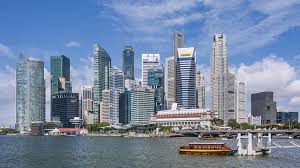
Singapore, on the other hand, has gone quite tremendous changes over the years and sometimes when I went back there for holidays or to visit my friends, I felt that it was oddly foreign. There are more and more foreigners, and wherever I go, I always meet an Indonesian on the street. It's weird. Singapore is rich with many forms of entertainment, but it can be a very stressful place to live. I remember when I was in high school, someone from the top 3 school across the nation committed suicide because she got one B in her midterm exams. The "B is a failure" mentality can be rather suffocating, but I don't think Singapore can be released from this culture any time soon. But hey, there are lots of good food in Singapore, like Hainanese chicken rice, laksa, and roti prata.
(image source: forbes.com)

Now, the reason why I started this post was because I just moved to Switzerland almost two months ago, and by far, this move was the hardest for me. Contrary to the "I don't care if you see everything inside my house, I'm gonna open all the curtains in my house" mentality of the Dutch, the residents of Switzerland love to close their windows not just with curtains, but with metal blinds. After working hours (let's say 5-6 PM), all windows are shut.

Enjoying Alpen horns in St Cergue, close to Geneva

You can say it is peaceful, but it is too quiet for me. It's kind of like Wageningen in the Netherlands. But I think I will get used to it soon by picking up hobbies and exploring places. The best thing about living in Switzerland is probably the abundance of good cheese and white wines, the reliability of the public transportation system, and the fact that you are forbidden to work on Sundays (yippie!!).

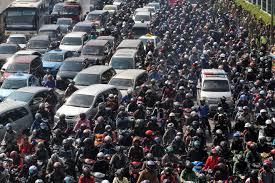
As for my hometown, Jakarta... I think I see more cons than pros, and if my family is not there, I would not pick it as a place to live. The traffic jam is insane. At one time during my vacation back home, it took us at least 30 minutes to go to the supermarket, which is probably less than 5 km away from our house. My mobility is extremely restricted, and I really hate that. Walking on the streets alone as a girl, even in a broad daylight, can be very dangerous. In the malls, in a restaurant, on the streets, in front of your house, in your car... let's not even talk about in public transport. When I go back, the only things I appreciate are my family, my house, and the food.

Can you imagine that you have a sudden heart attack in the middle of the road and the ambulance can't even pass through? Or you are in labour and you are going to give birth in the next few minutes, when the traffic is like this every day? I mean, let's cross our fingers that we don't have to be in such situations, but if any of these emergencies were to happen... Ugh!
(image source: says.com)


Oh, and finally, Tokyo! I went there in spring for 3 months, and it was awesome. Things are pricey, and people there are rather reserved. Stand out a little bit, and everyone will be staring at you. The morning trains make me understand how it feels to be a sardine in a can. But overall, it is a very convenient city with lots of entertainment (especially the karaoke boxes and game arcades!). Tokyo is rather unique, with very modern buildings blended with natural landscapes. The old and the new are standing side-by-side. Vending machines are everywhere, and 100 yen shops are dens of evil sucking money out of you without realizing it (the items are worth their values, though). People are still shy about speaking English, but the young ones are quite willing to speak English. And there are more and more signs in roman letters, so navigating through the city is rather easy.

In a traditional Japanese inn (ryokan)

What is your favorite place to live?

Monday, July 8, 2013

What I learned about the Netherlands, Ireland, France and Sweden

Officially, the end of my first year of European Master in Food Studies was over. With tears and hugs, byes and kisses, sweet and sour memories. Friendships developed - sometimes temporarily broken for reasons I could never comprehend - and memories woven. It was almost always lively around me, and I felt that I had a new family in Europe.

Now, let's put aside the emotional moments (because I'll start crying, alone in Rotterdam) and talk about things that I learned from staying in different countries throughout this one year. Just as an overview, our masters program involved being enrolled in four different universities in four different European countries, with students from all over the continents. In my edition, we have people from the Netherlands, Germany, Italy, Romania, Indonesia, Thailand, China, Hongkong/UK (dual citizenship), India, Ghana, Guatemala, Mexico, Argentina, and Colombia.

You may agree or disagree with some points that I mentioned, but keep in mind that whatever is written here is merely of my perspectives, and I don't mean any harm when I write this.

Well, let's start with the Netherlands :)

1st stop: Wageningen University, The Netherlands
- The Dutch are super punctual, with the exception of a few. Some professors may decide to lock you out if you come late to class.
- Appointments are crucial, even when you lost your phone and wanted to make a police report.
- Similarly, when you are sick, you need to make a doctor's appointment. If you're lucky, you can see the doctor on the next day.
- If you can't bike, you seem like a handicapped person in the Netherlands.
- Consider yourself comparable to a Dutch when you know how to bike while drinking beer, dragging a luggage behind you, or some crazy stunts.
- 'Gratis' is a nice word.
- They put sate sauce (Indonesian peanut sauce) on fried rice and even French fries (they call it the French fries warfare). And I really still find it weird up till this day.
- Ketjap manis in the Netherlands doesn't taste really good.
- Words borrowed from Indonesian language seemed to be written in what we call "ejaan lama / Van Ophuijsen" or "old spellings" in Indonesia (use Google's translation function to read the article about Van Ophuijsen spellings - it's in Indonesian). After all, Indonesia was colonized for 300 years by the V.O.C.
- When washing dishes, the Dutch people do it like how the street food carts wash dishes in Indonesia: the same water with some dishwashing liquid, reused over and over again to wash and to rinse the plates (they don't use clean water to rinse the plates).
- You hear so much "khrrr" sounds in Dutch sentences, and you'd probably be interested to try mimicking that sound for a while (if you're not so used to it).
- The Dutch people have a different sense of humour that might be a little bit hard to understand. Sometimes, you might think it's a cruel joke, but you'll get used to it. They don't mean harm.
- If you don't want to eat insipid, cold sandwich with only either one slice of cheese or one slice of ham, with no tomatoes, lettuce, or sauces of any kinds, or eat fresh cucumbers during lunch, then you have not adapted well to the Dutch culture.
- You will get familiar with the smell of weeds.
- If you have a somewhat fair skin and eyes that are not as big as the Europeans or the Latins, random Dutch students on campus may shout "nihao" to you regardless of where you come from. And I still don't get why they find this amusing.
- Most Dutch people pronounce "idea" as "ID". At specific occasions, it can be pretty confusing until you get used to it.
- Kroket is eaten with a toast or bread. McDonald's in the Netherlands even sells McKroket, which is basically a burger with kroket inside.

2nd stop: University College Cork, Ireland
- The houses are colourful because it is almost always cloudy and gloomy.
- There is no special bike lanes, unlike in the Netherlands.
- The Irish are unbelievably nice. They are almost like saints, and I'm not joking. I wonder how this kind of nice culture can be developed. A bus driver stopping the bus in the middle of the road to show you directions, and no cars behind the bus honking in anger? Uber coolness.
- If you open a door first and you see someone coming from another side, open the door and let that person pass first.
- Paddy Wagon is the best friend of students who like to travel around Ireland.
- The English Market is super awesome, and chicken and pork meat are insanely cheap.
- Bailey's cheesecake is a must to try, especially when Bailey's originated in Ireland. Anyways, there are a lot of Bailey's product in Ireland that you should try, including this Bailey's chocolate sticks.
- Guinness ice cream is nice, even if you don't like Guinness (I think it tasted like medicine).
- It's quite difficult to understand the English accents and expressions of the Irish, but after 2-3 weeks you'll get used to it.
- Girls wear 15cm heels and dresses with ultra short skirts at night to the pub / club / bar. Very sexy.

3rd stop: AgroParis Tech, France
- The French are, in general, not so friendly to those who don't speak French. Of course there are exceptions.
- Speaking English is definitely not a plus point when you're in France.
- If you try your best to speak French, people are in general more willing to help you.
- Pickpockets are everywhere on the train and train stations. Always be alert.
- The trains in Paris smell bad. Most of the time.
- Paris is the heaven for food. Almost always you will find good food, although your wallet may hurt.
- Baguette is a student's best friend. It's cheap (80 cents each), it's long, and the best is the one that just came out of the oven. It's crunchy on the outside, and soft on the inside. In Indonesia, a baguette can be used to hit a house burglar, just like a baseball bat.
- McDonald's in Paris sells baguette, too.
- Eating too much baguette may cause horizontal expansion of your body. Not kidding.
- 3 course meal for 3.10 euros from school cafetaria is awesome. But again, horizontal expansion of your body is inevitable.
- Lunch time is 1.5 hours.
- When you're under 25 and you're a student, go to as many museums as you can because they're free.
- Never go to Notre Dame du Paris during Easter if you want to pray properly. The tourists and their cameras will distract you, and prevent you from getting a seat.
- International mass at church means having the first reading in English, and the rest of the mass is a mix of Italian, Spanish and Latin.
- Macarons are everywhere. And Laduree is a little bit overrated.
- If you walk along Champs-Élysées, you will find Asians (especially from China and Indonesia) crowding expensive stores like Louis Vuitton and Long Champ.
- Arab Markets are great places to buy cheap, fresh fruits and veggies. And even your undies.

4th stop: Lund University, Sweden
- Fika (a break) is an essential part of the Swedish culture. No matter what, they always have fika every day without fail.
- Lagom is also an important word, which means "not too much, not too little".
- Once again, you will need a bike.
- Going to IKEA is always awesome, even though now it is owned by the Dutch.
- Swedish meatballs should be accompanied with lingonberry, and not cranberry. It's different.
- H&M is a Swedish brand, but the prices are not any cheaper. Still, they have good collections, especially when you go to Stockholm. There are at least 5 H&Ms around the city centre, one of those being called H&M Home (the 'headquarter' of H&M).
- Herrings, herrings and herrings of all types.
- Pickles in Sweden contain mostly sugar.
- Cheesecake in Sweden can be savoury, filled with seafood.
- Sweden is a safe country, but it doesn't mean that you can lower your guard down. 3 people, including me, had their phones stolen.
- Skåne is a region in south of Sweden.
- Everyone in Sweden is always ready for summer. Weekend + sunny weather = picnic.
- Good weather = barbecue time.
- Sometimes, when it says 10:00 on a schedule, it means 10:15.
- Travelling with Jojo card saves you 10% of travel cost.
- Buying duo-family ticket (works for 2 adults) saves you additional 20% of travel cost. Sadly, you have to travel in even numbers.
- You can pay tickets from the ticketing office with a combination of jojo card, cash or card.
- Getting a bike in early May is difficult because everyone graduates in late May.


And aside from this, I'm sure I have some learning points missing. This one year has been filled with a lot of learnings: in class and outside the class. The differences in cultures and perspectives can be somewhat a challenge, but this one year is the perfect time to not only notice the differences, but also to understand the differences and to learn to compromise. I have never been immersed in a group so rich in cultural differences, and I have to thank this masters program for it.

This one year has been very awesome, and even though it comes with a price of having to move almost every two months with all belongings, worrying about overweight luggages and shipments, with internship, where to stay next, an ongoing team project, classes and exams, financial spending... it's not as breezy as people think about this program. But it's definitely worth all the effort :)

Saturday, December 15, 2012

The Netherlands - Christmas Market at Wageningen

Since this will be my last visit to the open market in Wageningen, I went out despite having too many things to study for the final exams. I needed to buy a roll of packing tape and some fruits and veggies for the next 5 days.

The moment I set my feet at the market I realized that it was more lively than usual. I saw crowds - mostly families and barely any students - gathering around the city centre, and heard Christmas songs on air. Oh yes, it's this mobile music box I saw on the day Sinterklaas came to the Netherlands almost a month ago!


The city centre is decorated with lights and there were shops along the main street of the city centre - these shops were usually not there!


As I walked further, I saw a signboard that says Kerst Markt (Christmas Market).


Compared to the Christmas markets at big cities like Dusseldorf (Germany) and Antwerp (Belgium), this Christmas market is relatively small and they don't sell as much variety as those mentioned earlier.


But of course, the vital component of Christmas market is not missing: the mulled wine (gluhwein)! Also, it serves erwtensoep, which is the famous Dutch pea soup that everyone drinks in winter (according to my Dutch friend). I didn't drink the mulled wine because I have to study! I don't want to get drunk that early (I'm EXTREMELY weak with alcohol; my alcohol tolerance way below the normal Asian standard).


At the center of the city centrum, next to the church, I saw this mini ice skating rink for kids. I had hoped that there would be one for adults, but considering the size of Wageningen's centrum, an ice skating rink for adults would take up almost half of the open market.


The festivities doesn't end here. There was also a group of Christmas Carol team that kept moving from one place to another, harmoniously livened up the market. They had beautiful voices!


Also these guys from SpecSaver (a glasses company) went out with some kind of goods (they were not giving out those stuffs yet as they walked through the crowd so I don't know what's in there), in such a flashy appearance.


And of course, I didn't forget my initial intention going to the market. I visited the mushroom specialty shop and decided that I had to buy something because this will be my last time visiting such a shop. I don't know when else I can get these exotic mushrooms for such a cheap price.


I also tried oliebollen (Dutch traditional deep-fried dough ball):


In concept it is similar to a doughnut but it is rubbery and chewy, yet at the same time very soft on the inside and crunchy on the outside. It is served with confectionary sugar on the top. It is very sinful indeed, but as sinful as it can be, it is very delicious.

The poffertjes (Dutch mini fluffy pancakes) looked and smelled really good too, but my stomach was beyond the limit. I had a huge lunch before I went to the market, which was a really stupid decision I made earlier this morning. The way poffertjes are made is somehow similar to making Japanese takoyaki, but the pancake balls are then folded and topped with confectionary sugar. The Dutch surely love to add confectionary sugar to a lot of things!


If I don't have time to post on Christmas, I hope everyone will have an enjoyable Christmas! :)


Friday, December 14, 2012

The Netherlands - School Life at Wageningen University

I'm almost getting used to life in the Netherlands, and I will have to leave this country in about a week (I don't plan to spend Christmas holiday here). Due to the nature of my masters program, I will have to travel to 4 different countries: The Netherlands, Ireland, France and Sweden. And God knows where my internship will be next year.

I have been living a somewhat nomadic life. I left home when I was 11 to Singapore because of the full scholarship I earned from the government of Singapore (thanks!), and then I pursued and completed my bachelor's degree in the United States (with partial scholarship) when I was 18, and due to the difference in the timing of new academic school year I spent 3 months in Japan to study language, culture and a little bit of culinary. And now I'm moving almost every 2 months from one country to another. I have spent more than half of my life abroad. Some people can't stand moving around too much, but I think I'm destined to sail the world.

Courses in Wageninen University are organized into Periods, and each Period is roughly about 2 months and sometimes less (I heard there is only one month in Period 3). It is, in a sense, very intensive because you have classes every day and each class is roughly 2 hours. If it's a lab, it could take as much as 4-5 hours, excluding the time you spend at home doing lab reports and doing tutorials. Or do some readings required (or optional) for the courses.

One of the busiest course was Food Ingredients and Functionality. I love that course, and I am not being sarcastic. There were so many new things to learn. It was tough, and the lab really required a lot of effort because basically we were provided with a sheet of paper indicating the tasks we needed to do but we had too many options to solve the problem. The mentors (or TA, in US universities) were helpful, but they were not supposed to spoon feed us and tell us every single thing we needed to do. Considering we had 7 people in a group, coming to an agreement was actually proven to be more difficult than dividing up the tasks.


We were given a lot of freedom in the lab. We could use whatever equipment available, and we could schedule our own experiment. Well, we HAD to schedule our own experiment. Otherwise, nothing would happen.

Even though things were tough, I had fun in the lab, especially thanks to my European Master friends. At that time we were playing secret friends (some people call it 'secret santa'), in which we secretly give presents to a particular person chosen randomly by lottery and at the same time give hints about who we are. I always looked forward to receiving presents, and my secret friend was so attentive. She remembered what I really liked, and I love all the presents she gave me.


(pssst... you're not supposed to bring food inside a lab. Well, I didn't eat them inside the lab; they were on my desk when I came back from analyzing our emulsion samples in the lab next door as a surprise for me!)

Aside from that, my group (which also consists of solely European Master fellows) was a really fun-loving one. We had a good balance of serious matters that often gave us headaches and fun moments in the lab.


Each of the classes I took in Wageningen University comprised of about 140-160 students, so sometimes the lecture hall could be a little crowded, and sitting behind a Dutch person is actually a really bad idea for an average-height Asian like me. Some lecture halls are not elevated, so if you sit behind a reeaaaally tall guy, then it's your tough luck.


I know I should be studying, but I need some stress relief. It's already 10:28 PM and cooking is not the best option. And this might be one of my last posts while in the Netherlands. I'm leaving the next morning after my last exam, so I have to rush with packing my belongings and buying souvenirs. Still thinking of what to buy... my family doesn't really like cheese. Hmmm...

Well, before I go back to studying, here's a short clip on the most interesting food lab I had attended in Wageningen University: crushing boterkoeken blokjes with a probe until a 90% deformation was reached for Advanced Food Physics.


Ah, yuck. So much fat in that cake. But that was fun.

Monday, August 27, 2012

The Netherlands - Exploration Days

It's been more than a week! And yes I have tons of reasons and excuses for not posting anything to this blog. The Annual Introduction Day (AID) took so much of my time, and I actually fell sick on my 3rd day in the Netherlands.

The weather had been pretty bizzarre here: it was sunny, hot (37C) and humid. It wasn't the usual Netherlands weather, so people said. And since it's normally windy and chilly here, there was no fan or AC installed in the dorm room so those days were friggin' hot. I couldn't sleep for 3 days. Back in Indonesia I deal with hot and humid weather, around 32C in average, and I could survive because almost every house is installed with at least a fan. Luckily, the temperature was back to 'normal' after 5 days.

The orientation was fun, although I wish more of my group members would turn up. We only had about 5-6 members per day. It's a little sad, but I got to know a little more about the campus.

Travelling by bus is a little expensive, but if I save up on other expenses I'm sure I'll be able to reach the school just fine.


As I heard from  many people, almost everyone in the Netherlands uses a bike to travel around. I'm quite used to walking a long distance walk, so I was actually fine not knowing how to bike. But the problem comes when your friends ask you to hang out with them and you're the only one who don't have a bike. It's hard to tell them "please go on ahead I'll be walking" and if you keep making them wait for you I'm sure they'll get fed up.

So I bought a bike. Yup. I fell down so many times as I tried to learn how to bike for the first time in 20 years and the bruises on my left leg actually look pretty scary. They're huge and black (not blue). I showed them to my mum and she was actually freaking out. Well, I hope they heal soon.

Anyways, I explored a little bit about the town I'm currently staying at: Ede.

Being an Indonesian, I saw a lot of familiar words from Indonesian language, such as the picture at the bottom:


I knew that a lot of vocabularies in Indonesian language is actually derived from Dutch, yet I still find a lot of things awkward. Especially when you see Indonesian terms written in Dutch, as follows:


Sajoer Lodeh is actually an Indonesian dish, kind of like vegetables in coconut milk-based soup. I find it funny because that was how Indonesians used to write before 1972. We learned how to write roman letters thanks to the Dutch, and we learned how to read those letters according to the way the Dutch read them. The correct way of writing it in current Indonesian language is Sayur Lodeh. So it felt like I was brought to the past.

Tons of "misspelled" Indonesian products in the Netherlands. Those products may have been adjusted to the local taste but it's better than nothing :)

Another exciting thing about my first week in the Netherlands was the celebration of my country's independence day from the Dutch. I didn't feel anything awkward about it, but when I thought about it, it was ironically funny.


The red and white flag is actually Indonesian, by the way. We share the same flag as Monaco, and if you invert our flag up side down, you'll see a Polish flag.

The food provided by during the orientation was so-so. Well, I didn't expect anything grand since the university must have been affected by the Euro crisis as well. One day we had a BBQ outside. It was really hot and humid. We had chicken sate (skewer), beef patties, chicken sausages, bread and some salads.


The last day of the orientation was fun: graffiti workshop.


We went to the museum in Wageningen as well. There's no entrance fee. A lot of things have English translations, but you'll see some stuffs that are only available in Dutch.


When Germany surrendered at the end of World War II, the agreement to have the Germans disarmed was actually signed in Wageningen. 5 May, 1945.

And then we walked a little bit towards the meadow at the back of the school. Well, in general, this is how things look like in Wageningen. It's a very small town with lots of greens (which I heard will turn yellow and brown once autumn has started). Very peaceful, and you could see lots of beautiful stars when it's not cloudy at night.